You’re not imagining it, and you’re definitely not alone.
In my practice, the most common thing men ask me about is extra volume they can’t seem to get rid of, whether it sits on the chest, the abdomen, or the love handles.
The chest is usually at the top of that list.
If you’ve been skipping the pool, layering on baggy shirts, or feeling self-conscious in the locker room, you’re dealing with something that affects a majority of men at some point in their lives. It’s called gynecomastia, and it’s far more common than anyone lets on.
The medical term sounds intimidating. The condition itself is simple: enlarged male breast tissue. What’s not simple is figuring out why it happened and what you can actually do about it. So let me walk you through it the same way I would if you were sitting across from me in a consultation.
I recently sat down to talk through the body concerns I treat most often in men, chest fullness chief among them, and how I approach each one. Here’s that conversation. I’ll break it all down in writing below.
What’s Really Going On (And Why It Happens)
Gynecomastia is not just about being out of shape. There are two different types of male breast enlargement, and knowing which one you have changes everything about how I’d treat it.
True gynecomastia is actual glandular breast tissue. It feels firm or rubbery, right behind the nipple, almost like a small disc. It comes from a hormonal imbalance, specifically when estrogen rises too high relative to testosterone.
Pseudogynecomastia is different. That’s just excess fat in the chest with no glandular tissue behind it. It feels soft, like fat anywhere else on the body.
When I examine a man’s chest, the first thing I’m feeling for is whether the tissue is soft or firm. Soft, fatty fullness behaves like fat anywhere else. Firm, rubbery tissue behind the nipple is glandular, and it’s a different problem to solve. Most guys actually have a mix of both, which is why the fix often takes more than one technique. I’ll come back to that.
All men produce both testosterone and estrogen, and testosterone normally keeps things in balance. When that balance shifts, either because estrogen climbs or testosterone drops, breast tissue can start to grow.
The Usual Suspects: What Causes This to Happen
Sometimes gynecomastia is just part of how male bodies develop. Most boys get some chest enlargement going through puberty, and the good news is that, by most estimates three-quarters or more of the time, it clears up on its own within one to three years. But that still leaves a real number of men who carry extra chest volume from puberty onward.
And it doesn’t stop there. As men move into their 40s and 50s and testosterone naturally declines, many start noticing the same fullness on the chest. That’s often the first thing they bring up with me. Beyond age, a few other culprits are worth knowing about.
Your body fat percentage plays a big role. Fat tissue contains an enzyme called aromatase that converts testosterone into estrogen. The more body fat you carry, the more of that conversion happens.

Medications and substances cause about 20% of cases. The list includes alcohol (a big one), certain blood pressure medications, some antidepressants, and anabolic steroids, which is ironic considering why most guys take them in the first place.
Medical conditions can trigger it too. Thyroid problems, liver or kidney issues, and certain hormonal disorders all disrupt the testosterone-to-estrogen balance.
What You Can Try Before Surgery
Before we talk about the operating room, there are a few things worth trying, especially if your case is mild or recent.
Lifestyle Changes That Actually Help
Diet and exercise aren’t cure-alls, but they can make a real difference with the fatty component. Here’s what actually moves the needle:
- Strength training builds the chest muscle underneath, which improves the overall contour.
- Cardio lowers your overall body fat. You can’t spot-reduce, but dropping total fat helps.
- Limiting alcohol removes a major estrogen-boosting factor.
- Quality sleep supports healthy testosterone production.
Most guys see some change after about 8 weeks of consistent effort. But here’s the honest limit: lifestyle changes will not remove true glandular tissue. If there’s a firm disc behind the nipple, no amount of training or dieting makes it disappear. That’s a structural issue, not a fitness one, and it’s the single most common reason men eventually come in to see me.
When Surgery Becomes the Answer
For many men, gynecomastia surgery (male breast reduction) is the most effective and permanent solution. I combine two techniques, and which ones I use depends entirely on the kind of tissue I’m dealing with.
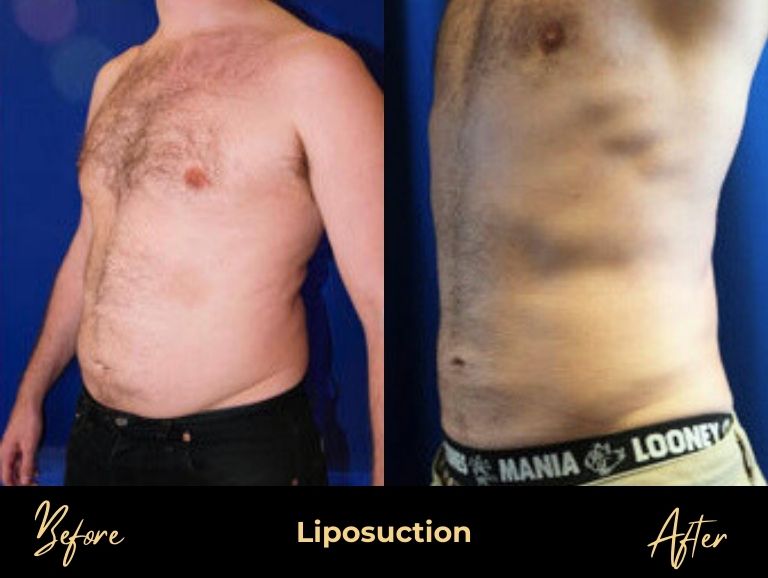
When the chest is soft and fatty, I’ll usually treat it with liposuction. I use the same inner-tube liposuction approach I rely on for the rest of the male trunk, working through tiny incisions. For the chest specifically, I go in through the axillary crease, the natural fold of the armpit, and use that access point to address the fullness in and around the chest muscle, including the tail of tissue that runs out along the side. The incisions are small and discreet, recovery is quicker, and scarring is minimal.
When the chest is soft, I treat it with liposuction. When it’s firm, glandular tissue, that has to be cut out. The right answer depends on what I feel during the exam.
When the tissue is firm or hard, which I typically see in someone who’s been a bodybuilder using a lot of steroids, liposuction won’t move it. That glandular tissue has to be removed surgically, usually through a small incision at the edge of the areola. It means a bit more recovery and a bit more scarring, but it’s the only way to take out dense gland and keep it from coming back.
The best result usually comes from doing both: liposuction for the fatty layer and direct excision for the glandular tissue. That combination is what keeps it from coming back. Liposuction by itself tends to leave glandular tissue behind, and studies have put the recurrence rate north of 30% when it’s used alone, versus under 10% when the gland is removed too. That gap is exactly why I don’t rely on liposuction by itself when there’s true gland to deal with. This is a common procedure for me, one I perform regularly, so the technique is well worn.
One more thing I see often: a lot of the men who come in about their chest want the whole trunk to match. So we’ll frequently treat the love handles and abdomen in the same procedure. But the chest is what brings most of them through the door.
The Real Impact (Beyond the Physical)
The change I notice most after this surgery isn’t the one on the table, it’s how men carry themselves afterward. The research backs this up: studies consistently show meaningful improvements in self-esteem, social comfort, and overall mental health. I’ve watched patients go back to activities they’d quietly avoided for years, from beach trips to taking their shirt off at the gym.
Even when a minor issue comes up, like a small blood collection or a little residual tissue, satisfaction stays high, because the quality-of-life gain is so large relative to the problem.
What the Surgery Actually Involves
If you decide surgery is right for you, here’s what the recovery timeline usually looks like:
- Day 1: You’ll wear a compression garment to limit swelling. Expect soreness similar to an intense chest workout.
- Days 2 to 3: Movement gets easier, though the compression garment stays on. Most guys with desk jobs head back to work in about a week.
- Week 1: Light cardio like walking becomes okay.
- Weeks 1 to 6: Compression garment for 3 weeks around the clock, then 3 more weeks during sleep.
- Month 1: Full upper-body workouts are usually cleared.
- Month 2: About 80% of the result is visible. Improvement keeps going until around 6 months, when the last of the swelling resolves.
- One year: All swelling is gone and the incisions have faded noticeably.
The Financial Reality
The average all-inclusive surgeon’s fee for this procedure in the San Francisco Bay Area runs between $7,000 and $15,000. That figure covers anesthesia, facility costs, and your post-surgery garments. Most insurance plans won’t cover it unless it meets strict medical-necessity criteria, which usually means the condition has persisted over a year, other causes have been ruled out, and conservative treatments have been tried first.
Whoever you choose, make sure you’re getting complete, all-inclusive pricing for gynecomastia surgery so there are no surprise costs later.
Finding the Right Surgeon
This is not a procedure to bargain hunt for. Look for a board-certified plastic surgeon with specific experience in male breast reduction. Check the credentials, look through real before-and-after photos, and confirm the surgery happens in an accredited facility.
When you sit down with me for a consultation, my job is to make it thorough and educational, not rushed or sales-driven. I’ll talk through every option, surgical and non-surgical, and tell you honestly which approach fits your situation. Sometimes that means surgery. Sometimes it means trying something else first.
Frequently Asked Questions
Am I a candidate for gynecomastia surgery?
If you have chest fullness that hasn’t budged with training and diet, and you’re in good general health, you’re probably a candidate. The only way to know for sure is an exam. When I feel the tissue, I can tell whether it’s soft fat, firm gland, or a mix, and that’s what decides the right approach. If your case is still changing, like a teenager mid-puberty or someone in the middle of major weight loss, it’s often better to wait until things settle.
Will it come back after surgery?
When the glandular tissue is removed properly, it doesn’t grow back. Recurrence almost always traces back to gland that was left behind, which is why I remove it directly instead of relying on liposuction alone. The one exception is a new outside cause down the road, like significant weight gain or a medication that drives the tissue back. Address the cause and the result holds.
How much scarring should I expect?
For a soft, fatty chest treated with liposuction, the incisions are tiny and easy to hide. When I need to remove firm gland, the incision sits at the edge of the areola, where the natural color change helps camouflage it. Most men tell me the scars fade to the point they stop noticing them. I’ll always tell you upfront which approach your chest needs and what the trade-off looks like.
How much time off work will I need?
Most men with desk jobs are back at work in about a week. You’ll wear a compression garment around the clock for the first few weeks, then just at night. Light walking is fine within days, and full upper-body workouts are usually cleared at about a month.
Can’t I just do CoolSculpting or liposuction on its own?
Both treat fat, not gland. If your fullness is purely soft and fatty, liposuction on its own can do the job. But if there’s firm glandular tissue behind the nipple, neither CoolSculpting nor liposuction will remove it, and that’s the most common reason a result disappoints or comes back. The honest answer comes down to what I feel during your exam.
Does insurance cover it?
Usually not. Most plans treat this as cosmetic. Insurance occasionally makes an exception when strict medical-necessity criteria are met, which generally means the condition has lasted more than a year, other causes have been ruled out, and conservative treatment has already been tried. We can talk through where you stand when you come in.
Where to Go From Here
Gynecomastia is common, but that doesn’t make living with it any easier. However you decide to approach it, what matters is understanding your options and working with someone who takes your concerns seriously.
You don’t have to keep living with something that chips away at your confidence. With the right approach, most men see a significant change and tell me afterward they only wish they’d done it sooner.
The first step is just an honest conversation about what’s possible in your specific case. From there, you can make an informed decision about the path that makes sense for you. If you have questions, I’d genuinely like to meet you and talk it through.