Why so many faces are changing after weight loss
If you have lost a meaningful amount of weight and the face looking back at you in the mirror seems older, thinner, or more tired than you feel, you are not imagining it. A facelift after weight loss is one of the most common requests we hear at our Danville practice right now, and the reason is simple. The body can change far faster than the face is able to keep up.
About one in eight American adults has now taken a GLP-1 medication such as Ozempic, Wegovy, or Mounjaro, according to a national KFF survey. As patients across the Tri-Valley and the greater San Francisco Bay Area lose 30, 50, or even 100 pounds, many are delighted with their bodies and caught off guard by their faces.
I see this shift every week. With the advent of semaglutide and all the other weight loss medicines that are out there, we’re seeing a lot more patients with weight loss.
What “Ozempic face” actually is, and why it happens
The term “Ozempic face” was coined around 2022 by a New York dermatologist, and it has stuck. It is not an official side effect of any medication. As Cleveland Clinic explains, it is simply the visible result of losing facial fat quickly.
Your face is cushioned and supported by small, structured pads of fat. When you lose weight rapidly, those pads shrink along with the rest of you. Skin that used to drape over a fuller face suddenly has less to hold it up, so the cheeks flatten, the area under the eyes hollows, and the jawline softens.
That combination of facial sagging after weight loss and loose skin on the face is what sends so many people searching for answers.
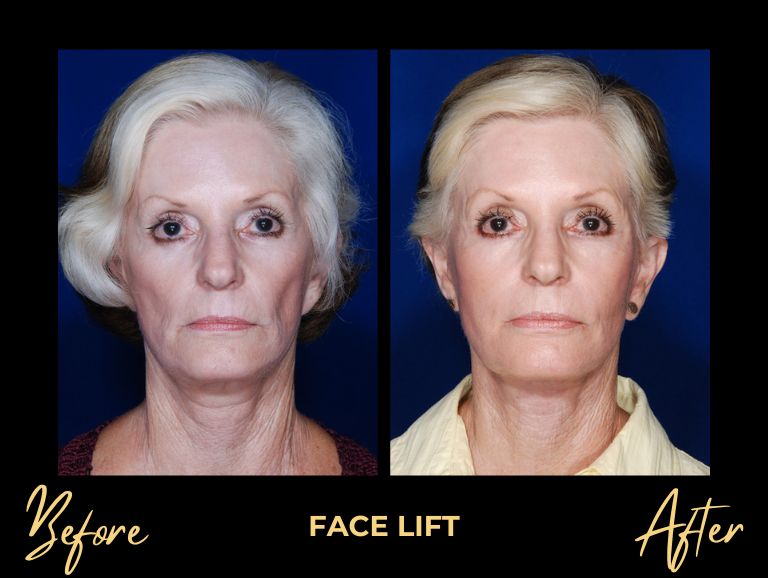
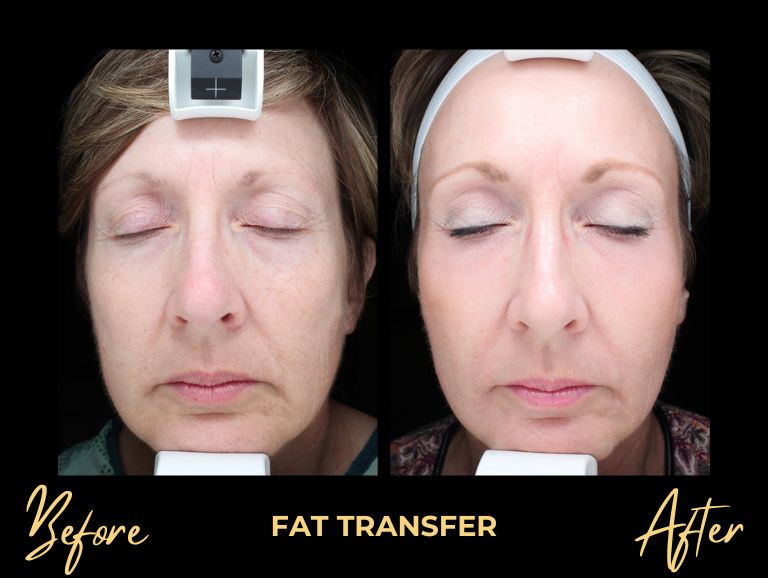
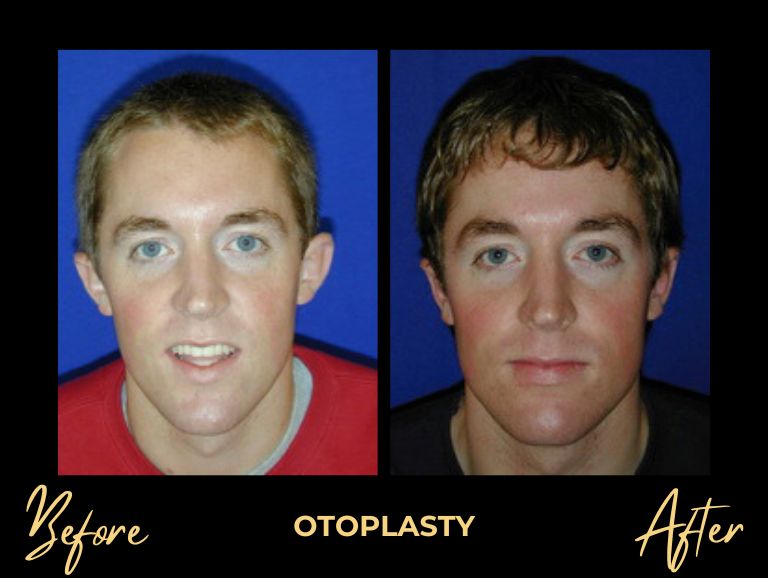
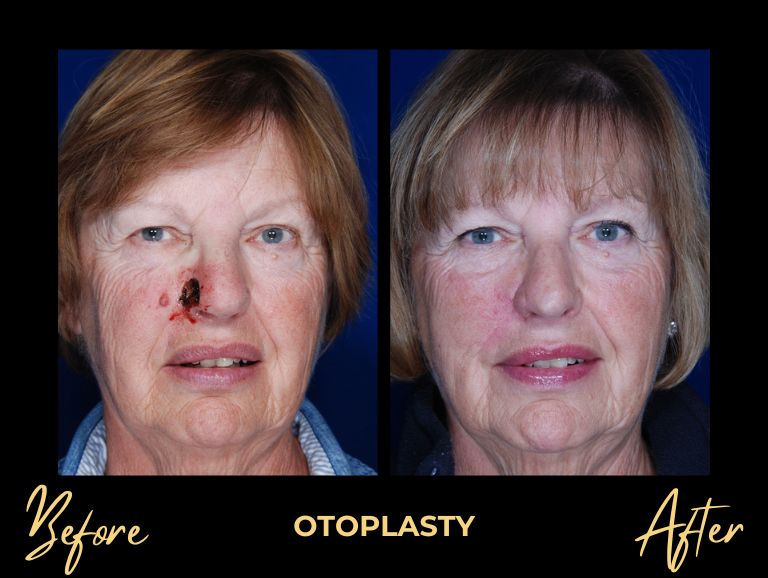

Deflation, not just loose skin: why a post-weight-loss face is different
Here is the part most articles miss. Facial sagging after weight loss is not only a skin problem. It is a volume problem.
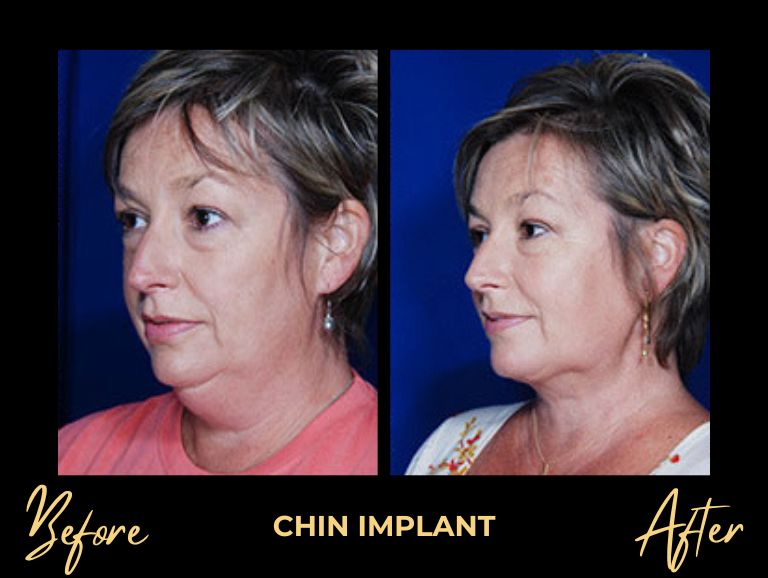
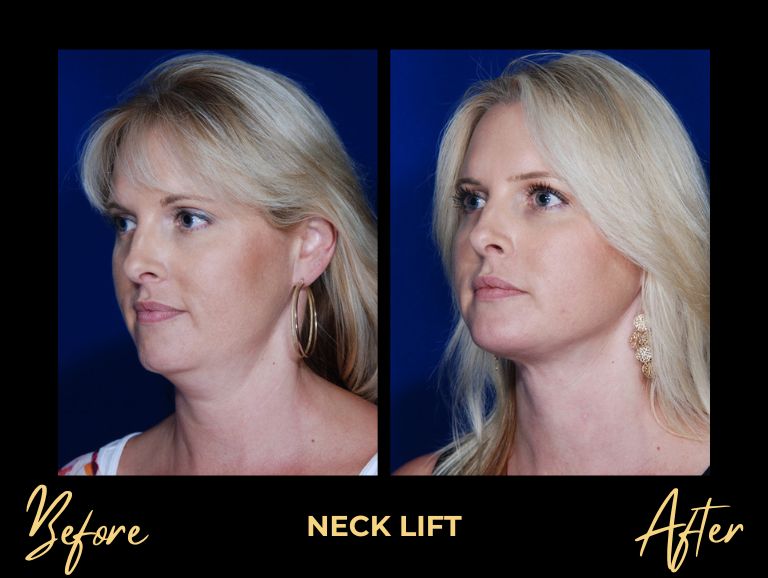
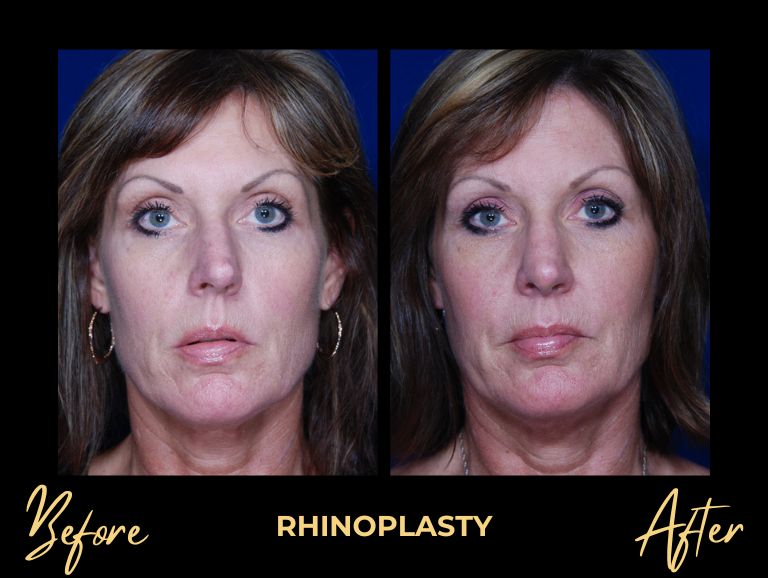
One of the primary things is loss of facial fat. And as that happens progressively, the lower eyelid hollows out, the jowls are created, and there’s laxity on the neck.
Plastic surgeons describe the post-weight-loss face as showing both deflation and skin laxity, a view echoed by the American Society of Plastic Surgeons. That distinction matters, because tightening skin alone on a deflated face can look stretched and unnatural. A good result has to put volume back, not just pull the surface tighter.
That is why our approach usually pairs a lift with facial fat transfer. It is also why fat grafting, not dermal fillers, does the real work here. Fillers can add a little volume, but overfilling a deflated face looks puffy and unnatural, while transferred fat replaces what was lost and settles in as your own tissue.
Will a facelift after weight loss look natural?
This is the question almost everyone asks, usually right after seeing a celebrity result that looks pulled or wind tunneled. The worry is understandable, and the answer lives entirely in how the procedure is done.
Rather than pulling skin tight, I restore what was lost. I replace volume with fat grafting first, then lift the cheek straight up rather than backward, and removes very little skin through a short scar that runs from the sideburn to just behind the earlobe. Lifting the cheek upward refills the hollow under the eye and softens the jowl at the same time, which is what makes the result look like natural facial rejuvenation, rested rather than operated on.
Because the goal is replacement rather than tension, an overdone look is almost impossible. Most people’s loss is actually greater than what we can fit in at one time, which means they’ll never be overdone or look puffy.
You may have seen the term deep plane facelift online. What patients are really searching for is a natural, volume-first result, and that is exactly what this approach is designed to deliver. You can see the full picture on our facelift page.
Are you a candidate? Timing your facelift after GLP-1 weight loss
The strongest candidates are people who have lost facial volume and developed jowls or neck laxity, and whose weight has settled. Of all the factors, timing matters most.
Should you reach your goal weight first?
Yes. If you are still actively losing weight, your face will keep changing, and that can undermine your result. We generally recommend waiting until your weight has been stable for a few months. A stable weight gives us a stable foundation, and it lets us plan precisely how much volume to restore and how little skin to remove.
Not everyone needs a facelift: matching the procedure to the laxity
A facelift is not the only answer, and it is not always the right one. No one ever needs any of the procedures here. This is all want-based. You don’t have to do it.
What will actually help depends on how much laxity you have:
- Mild to moderate laxity. A minimally invasive treatment called Ellacor can help. It removes thousands of microscopic cores of skin, each small enough to heal without a scar. As the skin tightens and builds new collagen while it heals, it firms the mild looseness that lingers when rapid weight loss leaves skin with less elasticity. Ellacor pairs naturally with fat grafting and laser resurfacing, and it can be done before, after, or alongside a facelift.
- More advanced laxity. When there are clear jowls and neck looseness, a facelift, often combined with a neck lift and fat transfer, delivers the fuller correction. Eyelid surgery (blepharoplasty) and brow work are added when the upper face is involved.
The right plan is the smallest one that genuinely addresses your concern, and that is something we map out together at your consultation. You can browse the complete set of options on our face procedures overview.
What recovery really looks like
For a full facial procedure that combines the face, neck, eyelids, brow, fat grafting, and laser, here is the honest timeline:
- First week. Expect swelling and bruising. For roughly the first four days it can look like things are getting worse, then around day five it turns the corner.
- Two weeks. Most patients are ready to be out in public, with a little makeup if they want it.
- One month. Most are comfortable being photographed at a special occasion such as a wedding.
- Beyond. Low-impact activity resumes, with heavier lifting held off for a couple of months.
Discomfort is usually mild. Most patients need nothing stronger than Tylenol or Motrin after the first 48 hours. A smaller procedure such as an isolated neck lift recovers faster, often in about a week, and patients who work from home are frequently back at it the next day.
How much does a facelift after weight loss cost?
Cost is one of the most common questions, and the honest answer is that it varies. The total depends on which procedures are combined, whether fat transfer and laser are included, the surgeon’s experience, anesthesia, and the surgical facility. A single Ellacor treatment sits at the lower end, while a combined facelift with a neck lift, fat transfer, and laser sits higher because it accomplishes much more.
Rather than quote a number that may not fit your situation, we give you a precise figure at your consultation, once we know exactly what your face needs. For broader context on how we think about results after major weight loss, our guide to plastic surgery after weight loss is a useful place to start.
Why Bay Area patients choose Dr. Ronan
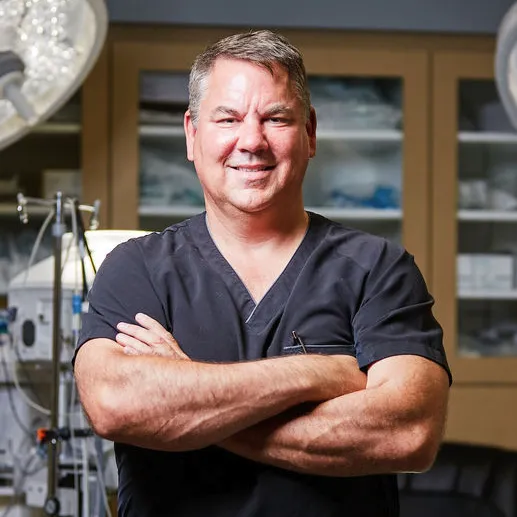
Dr. Stephen J. Ronan is a board-certified plastic surgeon with more than 20 years of experience, operating in an on-site surgery center in Danville that holds both AAAASF and Medicare accreditation. That answers the question patients ask most often online, which is simply which doctor, and where. The answer is Dr. Ronan, in the heart of the Tri-Valley, serving the greater San Francisco Bay Area. Every surgical facelift is performed under the care of a dedicated anesthesiologist in that accredited center, which is both safer and more comfortable than being treated while half awake.
What sets the practice apart is a refusal to oversell. What we won’t do is prey on fear and do procedures that we know aren’t going to work for you. If a smaller treatment will get you where you want to be, that is what I will recommend. If something will not work, I will tell you plainly.
“We want people who look entirely normal.”
Dr. Stephen Ronan, Blackhawk Plastic Surgery and MedSpa
Frequently asked questions
Should I get a facelift after weight loss?
If you have lost facial volume and developed jowls or neck laxity and your weight is stable, you may be a strong candidate. If your laxity is mild, a less invasive option may be enough. The only way to know for certain is an in-person assessment.
How do you fix a saggy face after weight loss?
By restoring lost volume with fat grafting and, when needed, lifting the cheek and tightening the neck. The emphasis is on replacing volume rather than simply pulling skin, which is what keeps the result natural.
Will my facelift look natural?
That is the entire goal. Because the approach refills volume rather than over-tightening skin, the result tends to look rested rather than operated on.
How much does a facelift after weight loss cost?
It depends on which procedures are combined. We provide an exact quote at your consultation once we know your plan.
How long is recovery?
Most patients are out in public around two weeks and photo ready by about a month. Smaller procedures recover faster.
Ready to talk about your face after weight loss
You worked hard for your new body, and your face should match the confidence you have earned while still looking like you. To talk through your options with Dr. Ronan, request a consultation or call our Danville office at (925) 736-5757. When you are ready, start with our facelift page to see what is possible.